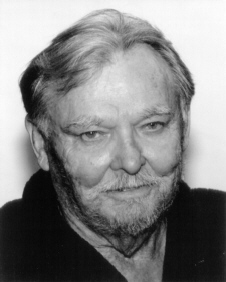

Inducted in 2000
During the early 1950s Sam Ewing III was the San Francisco Bay Area's leading
independent television program producer with as many as twelve live shows
a week on the air.
Sam's live show lineup included SWEEPSTAKES, WHAT IS IT? and TREASURE TUNE
CLOCK with Lee Giroux, CARTOON CIRCUS and MR. BLARE FROM WAY OUT THERE with
George Lemont, THE SANDY SPILLMAN SHOW and THE RUSTY DRAPER SHOW. He created
and produced San Francisco's first weather program, WEATHERAMA on KGO-TV.
His nationally-syndicated production of WONDERS OF THE WORLD played on KTVU
and stations across the country, as well as on the Discovery Channel on cable.
Sam has published three self-help books (amazon.com) from TAB-McGraw Hill
on TV - "YOU'RE ON THE AIR!", "DON'T LOOK AT THE CAMERA"
and "PROFESSIONAL FILMMAKING".
Sam spent ten years at KNTV, San Jose as Creative Director. In 1986 he turned
out NASHVILLE TALENT SEARCH in San Jose for the Nashville Network shown on
three Bay Area stations.
Sam began his career as a radio announcer in Mississippi and in the late
1940s announced and handled news for KYA, KSFO and KSAN.
Sam lives with his wife Karol in Port Angeles, Washington where he writes
short articles and quips which appear in the Wall Street Journal, Saturday
Evening Post and other publications. He has a Quotable Quote in the September
2000 Reader's Digest.
Sam Ewing II passed away on May 5, 2001. He was 80 years old.
--------------------------------------------------------------------------------
© Copyright 2002, NATAS, Northern California Chapter.
---------------------------------------------------------------------------------------------------------------------------------------------------------------
THE ADVENTURES OF SAM EWING III - A Chronicle of Jaw Twitching
I.
Several of my sons and my wife Karol have kept after me to put down on paper
(in my seventies) a skeletal autobiography of my life and numerous careers
within it. I suppose they want me to get at it before my mind snaps and I
wander off somewhere. I feel like I'm writing my own obituary ...
Up front I want to announce that with all my radio and TV shows, commercials,
documentaries, books and other writings over a 60-year period, I never won
a single award. That's because I was always exclusively commercial-
minded, as opposed to artistic. As such I made as much money as I could, appealing
to average and below-average schnooks. I don't regret that I spent most of
it, just as my ancestors spent theirs.
However, I can look back as a real honest-to-God pioneer in radio, television
and cable-TV. That's enough satisfaction. I must also go on record stating
that I have hated any job that required selling. There are born salesmen who
enjoy peddling. I'm not one of them, even though - out of necessity, I always
held my own selling radio and TV time.
II.
First of all, a person has to be born, and my birth took place without fanfare
in Vicksburg, Mississippi, on December 13, 1920. That was the year that commercial
radio came into being, and it was fitting, I suppose, that I should come right
in with it.
They tell me I was named Samuel Fredrick Ewing III, son of an ex-newspaper
cartoonist, movie theatre owner and dog trainer. The Ewings had been wealthy,
but typically spent it all (as had the Laniers).
My mother, Frances LeClaire Lanier, came from a well-known and well-to-do
family that dates back to the court of Charles I of France. The first Lanier
sailed to America on a ship on which George Washington's grandfather was second
mate.
The Ewings, according to reports from my late half-brother Samuel Albany (my
father obviously liked the name "Sam"), were fierce Scottish mountain
men who were banished from their native land for stealing the Queen's sheep.
My mother, a nurse and medical secretary, and father were divorced when I
was in cloth diapers (Pampers were unheard of in those days). She volunteered
into the U.S. Army as the country's 69th military nurse. As a matter of fact,
her serial number was N-69. Frances rose in the World War II years to the
rank of Major, participating in many battles and landing on Omaha Beach in
the second wave, on D-Day, the 6th of June, 1944.
I lived with my grandparents, Wood Edward and Claire Goff Lanier in a huge,
decaying old Southern Vicksburg home where reportedly General Ulysses S. Grant
set up his command post for the historic Civil War siege of Vicksburg. My
great-grandfather Needham Birch Lanier was reportedly a rebel spy, who owned
five huge plantations and 169 slaves at the one I was raised on. Most of his
property was burned down or otherwise trashed, and his slave colony set free
by Yankee invaders. Not all of the slaves wished to be self supporting, history
recalled.
The old Lanier family Bible and my great-grandmother's spinning wheel are
still displayed behind glass in the Vicksburg Civil War Museum. The family
cemetery still exists, though extremely overgrown, and the big marble headstones
removed by Yankees after the Civil War. However, the old wrought iron fencing
still stands.
My grandfather's only job in his 97-year life was 16 years as Supervisor of
Warren County. Karol and I visited his old office in what is now the Museum.
III.
At age 10, 11 or 12, I'm not sure, my grandmother became very ill and I was
farmed out to grow up in the home of a Vicksburg family named Hunter, as a
paying boarder. I had my own little room, the size of a large closet, and,
oddly enough, a private bath. Mr. Hunter worked for the local Coca Cola company.
He had three young sons about my age. Two of them died in World War II, along
with a half-dozen of my school friends, when a Nazi U-boat torpedoed their
troop ship.
I was ambitious as a kid and, through sheer nerve and naiveté, got
a job as a cub reporter and teen columnist (The S. Ewing Circle) at the Vicksburg
Evening Post and Morning Herald at age 14 while attending St. Aloysius High
School, operated by the good Brothers of the Sacred Heart. It was in the black
heart of the Great Depression. My Social Security documents bear out the fact
that Social Security and I started together in 1935.
The Evening Post editor assigned me to cover the city court every morning.
I got my first shocked look at real life - pimps, whores, thieves, perverts,
the dregs of humanity, etc. Mentally I grew up pretty fast. It led to considerable
cynicism as well.
My high school grades were so-so. I wasn't a dedicated student, but I wrote
a great deal for the school paper, The Golden Quill, bound copies of which
I have passed on to grandson Sam V.
At age 16 I went to work part-time as an announcer at Radio Station WQBC ("We
Quote Better Cotton") in Vicksburg, while also carrying on some duties
at the newspaper. The papers, radio station, banks and most everything else
in town were owned by the Cashman family. The pay was $9 a week for my efforts.
In a time when 5 cents would buy a Coke, 10 cents a hamburger and 15 cents
would get you into the movies, that was good money. I saved a couple of hundred
dollars.
In 1938 I graduated from high school and, at the urging of my mother, rolled
west on a Greyhound bus to enter the University of San Francisco, a Jesuit
institution of learning, majoring in English. I was a corporal in the ROTC
program, but didn't participate much in University activities. They bored
me.
For a few weeks one summer, I believe 1939, I appeared in the Golden Gate
Exposition, a world's fair, on Treasure Island in San Francisco Bay. It boasted
a huge production called the Cavalcade. I was cast as George Washington's
drummer boy because of my short stature, and received $40 a week, a small
fortune, along with food coupons and passes to such shows as Sally Rand's
Nude Ranch and Billy Rose's Aquacade.
Early in 1942, while at USF, I was recruited by U.S. Naval Intelligence and
stationed at the District Intelligence Office (DIO), 717 Market St., San Francisco,
as an "analyst" petty officer. I didn't go to boot camp; I took
only a few days training on Goat Island (Yerba Buena) and I learned to swim
at the Fairmont Hotel, compliments of the Navy.
I was first a Yeoman Third Class, then promoted to Yeoman Second, comparable
to an Army staff sergeant. I signed a secrecy pledge to never reveal any of
the top secret material I handled obtained from FBI, Army Intelligence
(G-2) reports, and ONI sources. Some of the subject matter that crossed my
desk has never been made public. And I'm not going to do so now.
IV.
Muriel Regina Clance, a very Irish Catholic secretary, and I met in a San
Francisco boarding (guest) house, the Pine Inn, where we were living in 1942,
and were married.
"Bud" (Sam IV), Richard, Barry and Larry, a dog Rusty and Holly,
a Rhesus monkey, along with a short stint with Bert the alligator, joined
us through the years.
Many, many times the expression, "Look out, Dad's jaw is twitching!"
was heard from the four sons.
During the early two years of World War II I was stationed at the DIO in San
Francisco, living in an apartment, until I was shipped via San Diego south
to Dutch Harbor and Cold Bay, Alaska, north in the Aleutian Islands. Through
a fluke I had been responsible for the capture of a German espionage agent
in the Presidio of San Francisco.
In Alaska I became part of a special, select, seven-man intelligence unit
headed by Navy Commander Seeman Gaddis, formerly of the DIO. Many years after
the war, from the Commander I learned that he carried a letter from Admiral
King, the Chief of Naval Operations and of the Joint Chiefs of Staff, that
gave him unlimited authority over all ranks. Gaddis was one of America's top
intelligence agents. It was said that he broke a Japanese code.
In Dutch Harbor I had coffee with Dashiel Hammet, the famous writer. He was
the sergeant editor of the Adak SUN, an Armed Forces daily. My duties in Alaska
included editing a daily (coded) newspaper, THE HARBOR NEWS, announcing at
the Armed Forces radio station WXLC, and directing a camera crew under the
guise of a Navy War correspondent to film as many officers as possible of
the 5,000 Russian navy contingent stationed at Cold Bay. Even as allies the
Soviets were our sworn enemies. I received a commendation for these activities.
On V-J Day (the surrender of Japan), I was asked by Armed Forces Radio Services
to broadcast from Dutch Harbor a "Report From The Aleutians". This
broadcast was heard around the world. I read a script prepared, I imagine,
by Intelligence.
When World War II was declared ended, I cruised back to the United States,
port of Seattle, on a ship in the company of 6,000 men who hadn't bathed or
shaved for several weeks. You don't forget things like that. I don't forget
how seasick I was, either.
During the war I had written lyrics for several songs that enjoyed a small
success: ROUNDUP TIME OVER THERE, introduced on a network NBC radio musical
show, and A DAYDREAM IS A LOVELY THING, recorded in Hollywood by Paul Martin's
Orchestra.
V.
My wife, sons "Bud" and Richard and I moved to Hollywood, where
I first got a job as an announcer for $1 an hour at Paragon Music, a radio-type
service piped into 1800 grocery stores and bars in Los Angeles. The 12-hour
days eventually got to me. One night I fell asleep at the microphone. Not
long after that I was fired.
I wrote letters to radio stations out of state, but as close to California
as possible, and landed a job at KYUM, Yuma, Arizona, as Program Director.
At KYUM I originated the SQUARE SHOOTERS PARTY, a Saturday morning game show
for kids broadcast from a theatre stage, and escorted winning children and
their mothers to Hollywood to MGM, Paramount and Republic studios. We were
entertained by Roy Rogers & Dale Evans, child star Margaret O'Brien, and
many other celebrities of that era. My greatest thrill was lunching in the
MGM commissary with such stars as Clark Gable, Frank Sinatra, Gene Kelly,
Greer Garson, Danny Thomas and dozens more - not to mention famous directors
and producers.
After a year of Yuma we moved to Phoenix where I helped put on the air KRUX
as acting program director. The next move was to KSRO, Santa Rosa, where Barry
and Larry were born 10 minutes apart.
Muriel was always willing to drop everything and move, a very large plus in
her favor. And she was an excellent secretary.
In their young years, the four boys slept in bunkbeds in a single room, which
I called a "barracks". I organized them into a "squad".
Each week I appointed one of the boys "sergeant". He was responsible
for keeping the barracks clean and uncluttered. When I made a weekly inspection
I rolled a pair of ballbearings in my hand (an idea taken from Captain Queeg
in THE CAINE MUTINY). The lads stood at attention by their bunks, hoping I'd
say "okay", and not "unsatisfactory".
At KSRO I became "Sidesaddle Sam", a popular Western DJ, receiving
up to 500 fan letters a week. I could have gone to giant KSFO in San Francisco
as a top radio personality, but I didn't want to dress and walk Western, regardless
of fame and cash.
With a wife and four sons, and very little money, I went into the ad agency
business, with two partners - Del Gore and Jim Diamond, in San Francisco.
To help ends meet, I worked part-time at KYA as an announcer and newscaster.
Muriel worked also.
Each weekday I wrote and announced two agency-produced half-hour shows - HOLIDAY
HOUSE as "Buddy Holiday" and SAN FRANCISCO AFTER DARK which promoted
the city's leading restaurants.
The agency became a success eventually as a radio and TV production house.
At one time I had 14 live TV shows on the air every week with San Francisco's
best-known personalities: Lee Giroux, George Lemont, Russ Coughlan, and Rusty
Draper. The shows included TREASURE TUNE CLOCK, WHAT IS IT?, STOP THE PRESS,
THE RUSTY DRAPER SHOW, SWEEPSTAKES, MR. BLARE FROM WAY OUT THERE, MEMORY TIME
WITH STAN NOONAN, THE SANDY SPILLMAN SHOW, UNCLE GEORGE'S CARTOON CIRCUS,
WEATHERAMA (San Francisco's first weather show) and others. I also created
for DeSoto Sedan Taxicab Company what I believe to be the first advertising
placed on taxis.
These TV shows were all presented live, but when film programs came out of
New York and Hollywood at lower cost, featuring movie stars, I could no longer
compete financially and our agency fizzled out. For a while I voiced a morning
broadcast, Commuter News on KSFO. I used the name Ray Rice.
And then, for a time I joined an ad agency, Ley & Livingston, and opened
a Phoenix, Arizona branch office for them. But we had a falling out. It was
in Phoenix that I met my longtime friend, Pat Cooney.
VI.
Film syndication was an important factor in the '50s and our family moved
by Sunbeam Talbot, Plymouth Station Wagon and Bekins Van Lines to Atlanta,
Georgia, where I became Executive Vice President of STEVENS PICTURES FOR TELEVISION.
We had offices in Atlanta, Miami, Nashville, Dallas, New Orleans, and Richmond,
Virginia. We were very successful in this enterprise.
STEVENS handled syndicated half hours and movies sold to TV stations throughout
the South. Especially successful was PLAY MARKO, live bingo on television,
created by Pat Cooney back in Los Angeles. I sold and produced this show in
many cities until the Federal Communications Commission declared the program
a lottery, and, consequently, illegal.
VII.
California called. I wanted to take a crack at Hollywood.
Muriel kept us financially afloat by taking jobs, first on the GROUCHO MARX
"YOU BET YOUR LIFE" show, and later as show secretary on TRUTH OR
CONSEQUENCES, a program she worked with for many years.
After a time of job hunting I joined Pat Cooney as Executive Producer at Caples
Company, a national ad agency. Pat and I produced a handful of moderately
successful shows - STRANGE LANDS AND SEVEN SEAS, THE TREASURE TUNE CLOCK,
THE MYSTERIOUS UNIVERSE, and WONDERS OF THE WORLD.
Although a minor national success, WONDERS OF THE WORLD helped to end my marriage,
which was at best on shaky ground. Selling that show on the road across America
for months also terminated my association with the Caples Company. It was
my own fault actually. I didn't have the right handle on life. I had many
bad months and moments travelling in the USA most of the time for TV syndicators,
such as Medallion Films and Richard Ullman Company. I drank too much, was
depressed much of the time. Cigarettes and whiskey take their toll.
VIII.
But things started to look up. In the late 1950s I selected to take a 75%
cut in pay and quit the road jobs. I moved with Barry and Larry to Bellevue,
Washington, to settle down as an announcer and salesman for Radio Station
KASY in Auburn, a Seattle suburb. John Mowbray, a friend from San Francisco,
had received a permit to build a radio station in Port Angeles, and he asked
me to manage it.
While we were waiting for important FCC paperwork and equipment, I covered
the Washington State Legislature session for four months as a radio reporter.
My daily reports were heard on a network of 17 radio stations in Washington,
including all the major ones in Seattle. I got to know the Governor and many
high-ranking politicians quite well. I attended the Governor's Ball, quite
an event.
When the legislature recessed I found myself out of work, so to keep meat,
tuna and chicken pies and canned beef stew on our Bellevue table, I got a
job as a rock 'n roll DJ and salesman at KQTY in Everett. It was a hell of
a commute and my least favorite job, but I drove "through rain and fog"
and thanked owner "Wally Nelscog" for the "opportunity".
(While jockeying a daily show on KQTY, two excited teen girls came into the
studio to meet "Buddy Holiday". I told them "that's me".
They looked shocked. "You??!" A few minutes later they drifted away
... shortly thereafter I left the rock 'n roll DJ field to someone else.)
At last KAPY construction was FCC approved.
IX.
Barry, Larry and I moved to Port Angeles in early 1961 and physically helped
to build KAPY radio. I even named the street on which the station stands -
Melody Lane. Today you will find that name on all the city maps.
The Port Angeles competition of newspaper and radio, owned by one politically
powerful family, hated us, and using every dirty trick possible, including
their control of the police department and superior court judges, attempted
to drive us out of town. Thanks to our determination and a friend, Gordon
Sandison - a state senator, they failed. KAPY became very popular with both
listeners and merchants.
The best thing that happened for me in Port Angeles was my marriage to Karol
Newlun whom I chose as a station Girl Friday from 70 secretarial applicants.
Actually Karol was more like one in a million than one in 70. Completely unselfish,
she is the best person I have ever known, and my best friend. As someone said,
if I had put all of the characteristics I desired for a wife in a computer,
Karol would have come out.
When the KAPY job crashed, due to a serious disagreement between the owners,
John Mowbray and Walter Schibig, a millionaire investor, the Ewings moved
to Carmel, California, a wonderful area that we all still think of as "home".
X.
I became sale manager at KMBY, Monterey, a rocker - and later at KSBW-TV,
AM & FM, Salinas-Monterey. Karol was a secretary for Cypress Press, Barry
and Larry graduated from Carmel High and along with their brother Richard,
worked at various places in the area, mostly hotels and restaurants. Our income
was supplemented by my free lance writing for various humor and men's magazines.
At one time I was among the top 5% of free lance writers in the USA.
XI.
Historically, in America, the year 1968 was a "crack in time". Everything
was in turmoil. Riots, assassinations, unrest, the war in Viet Nam. It was
also a terrible year for Karol and me.
After being fired from KSBW-TV for reasons that were not clear, inasmuch as
my billing was good, I took a job thousands of miles away in Johnstown, Pennsylvania,
as so-called general manager of radio and TV stations WARD-TV, AM and FM.
The town and the broadcast situation were both awesome, and not in the best
sense of the word. The facility was owned by an 82-year-old cranky tightwad
and alleged crook who immediately backed off our financial agreement. I quit
after only a few months.
Karol and I moved everything into storage and drove to West Palm Beach, Florida,
suffered a hurricane and one-day employment at a failing FM radio station.
Karol went to work for Equifax, known in those days as Retail Credit Company.
She was to remain in some capacity in that company for the next 20 years.
While she worked in 101 degree Florida heat, I lay on Palm Beach sands, across
from the Kennedy estate, and wrote free lance articles for magazines.
Meanwhile, I applied for work at all broadcast outlets in the area. At last
an astounding offer came from a Jupiter, Florida radio station. Sales Manager
- $50 a week! We couldn't survive on that. A hidden voice told us: "Get
the hell out! Go west!"
XII.
Next stop: a visit with Richard, Bjorg and soon to be Michael in Seattle.
After a while I landed another strange job at Channel 13 in Tacoma. I was
general manager, without authority, for exactly one week. Pay: $200. To collect
that amount I had to contact the state's Department of Labor & Industries.
Off to Eugene, Oregon, to help reorganize KEED, a rock 'n roll station whose
music I hated. Karol again got a job at Equifax.
We were very short of money, everything was still in storage in Pennsylvania,
but saved enough in eight months to get back to California in San Jose where,
following one month as a salesman at KICU, Channel 36, I was hired at KNTV-Channel
11, a Gill Industries company, as a writer-producer-announcer. It was the
start of an association that lasted for 18 years. During these years Karol
remained with Equifax, and eventually became the office manager/supervisor
of the San Jose office, overseeing some 40 people.
The more curious among you can read of my many grim and humorous adventures
at KNTV-11 in three published books - YOU'RE ON THE AIR, DON'T LOOK AT THE
CAMERA and PROFESSIONAL FILMMAKING.
My job was a key one at the TV station, and I was called on for all sorts
of special assignments. I made outside deals, too, to write marketing films,
training films for IBM, 20 half-hour shows for PBS' "We The People Read",
and lots of other presentations. These were busy years. We did well enough
financially to go to Europe a couple of times, and visit with Richard, Bjorg,
and sons in Norway. Karol won $125,000 in the state lottery ...
XIII.
Gill Industries owned GillCable as well as KNTV-11, and I performed a number
of jobs for extra money for that subsidiary - writing, announcing, producing
a cable channel, the "G" Channel, and so on. I wrote their Service
Manual. I also wrote articles for Gill-owned San Jose Magazine, which eventually
went kaput. (Hopefully, not because of my contributions.) When Gill sold KNTV-11,
it was logical that I transfer to the cable company.
XIV.
I started with the cable company in April 1979. (Incidentally, on June 6,
1979, I quit smoking forever. Back in 1961 I had given up whiskey and "wild,
wild women".)
The cable company job was perfect for me. As Media Services Director I brought
into play all of my experiences of the past 40 years, both print and broadcast.
I handled *Promotion
*Voice Over
*Publication of a monthly program guide
*Created and programmed in-house pay-TV channels, such as Rendezvous, an adult
service, and the
Classic Movie Channel
* I created Pay-Per-View Channels: Hollywood Premiere along with a 24-hour,
2-channel pay-per-view
service
*I leased and scheduled new movies for the local channels from the major studios
*I produced a quarterly company publication, The GillLine
*I created display ads
*I worked with Ted Turner's people in Atlanta to get CNN off the ground in
the San Francisco Bay Area
My position called for Karol and me to attend all of the big cable conventions
- Anaheim, New Orleans, Houston - which were great fun. Those were good years.
We got to Europe a third time.
XV.
However, in the end Gill Industries proved cold-blooded. Once I got pay-per-view,
promotion and other activities organized, and they were planning to sell to
a large national company, they decided that, at age 67, I was too old and
too costly for them. Out of the blue they fired me with the lame excuse that
due to company reorganization, my job no longer existed. They also locked
me out of my office, and I could only retrieve my property with a security
guard present (a practice that may have been commonplace in some Silicon Valley
firms, but that proved Gill's expensive mistake).
Through connections and good luck, I enlisted, on a contingency basis, one
of the best Wrongful Termination attorneys in the USA - John McGuinn. Among
other big wins, McGuinn had defeated IBM in a landmark case. John was president
of the Trial Lawyers Association. He became San Francisco's very first Superior
Court Judge pro tempore. President Bill Clinton offered him a federal judgeship,
which he turned down.
Over a five-year-period from 1987 to 1992, with many continuations, stalling
motions and an appeal by Gill following a jury verdict in my favor, my lawsuit
for wrongful termination through age discrimination cost Gill Industries an
estimated $1,000,000 or more in awards, court costs, and legal fees. It is
published in the law journals as a landmark case.
The lawyers and courts, of course, got most of the money, but Karol and I
were happy with the results and some cash. Also, I felt very good that my
lawsuit had prevented Gill from firing at least half a dozen other old-time
"over-the-hill" employees that were on their termination list. Gill
had hoped, I'm sure, that I'd die of old age before the case was finalized,
and money paid to me. However, by a twist of fate, it was Gill's owner, Allen
T. Gilliland, who died during that time.
XVI.
Karol and I had moved to Port Angeles, Washington, in 1988 and bought a home
with savings. I had planned to get a job, but, at my age, couldn't find one.
Karol went to work part-time with Camp Fire. She is with them at this writing.
Free-lancing seemed the only way for me to keep busy and bring in a couple
of bucks each month. As of 1996, I am published regularly in Reader's Digest,
the National Enquirer, National Examiner, Globe, Sun, Wall Street Journal,
Saturday Evening Post, and a dozen or so lesser-known publications. The Ewings
of Norway read some of my quips in foreign publications (for which I do not
get paid).
Of the many jobs I've had, though, the one I enjoyed most was working as announcer
on dance band remotes, cupping my left ear so I could hear what I was saying
in the "big middle" of the music...
Without question, my most important achievement in this life has been to produce
four outstanding sons, who are producing their own fine families. All my boys
do well. (There's not a crackhead in the bunch.)
Sam IV ("Bud") has a premier show business position as Vice President
of a major TV program producer. He has headed up children's programming at
NBC-TV and Hannah-Barbera and been responsible for, among others, the Smurfs.
He and wife Cary live in Burbank, California.
For years Richard has served as an electrical engineer at ELF, a giant French
oil company. Richard is senior with them, assigned primarily to offshore drilling
platforms in the North Sea. Richard and wife Bjorg own their home in Kleppe,
Norway.
Barry has returned to Carmel. He is a successful landscape architect/draftsman.
His wife Susan is a leading artist and muralist in the San Francisco Bay Area.
Barry's twin, Larry, has made his career in hotel management, having managed
some of the finest hotels on the Pacific Coast, including the Sheraton at
Disneyland. He now headquarters for Countryside Inns in Corona, California
with his wife Sherry, who succeeds in several areas of health and beauty care.
I'm proud of them all ...
As yet I am not a financial burden to any of my four children. Do I hear deep
sighs of relief around the world? Of course, there's always tomorrow ... (to
be continued, I hope)
 Sam Ewing has been a professional writer since age 14 in 1935 when he was
a reporter at the Vicksburg Evening Post and Morning Herald in Vicksburg,
Mississippi. He also announced for WQBC, the local radio station.
During the past 50 years Sam has produced five non-fiction books,
dozens of self-help film, hundreds of magazine articles and witticisms.
Sam's writing was done free lance while he worked in TV, radio,
advertising agencies and cable as a sales and program executive.
He attended the University of San Francisco until World War II when
he joined Naval Intelligence for three and a half years, serving both
in the U.S. and in the Aleutians. In Dutch harbor, Alaska, Sam edited
a daily Armed Forces paper, the Harbor News.
Now semi-retired with his wife Karol of 36-plus years, he concentrates on
producing short humor and magazine pieces.
Sam Ewing has been a professional writer since age 14 in 1935 when he was
a reporter at the Vicksburg Evening Post and Morning Herald in Vicksburg,
Mississippi. He also announced for WQBC, the local radio station.

During the past 50 years Sam has produced five non-fiction books,
dozens of self-help film, hundreds of magazine articles and witticisms.

Sam's writing was done free lance while he worked in TV, radio,
advertising agencies and cable as a sales and program executive.

He attended the University of San Francisco until World War II when
he joined Naval Intelligence for three and a half years, serving both
in the U.S. and in the Aleutians. In Dutch harbor, Alaska, Sam edited
a daily Armed Forces paper, the Harbor News.

Now semi-retired with his wife Karol of 36-plus years, he concentrates on
producing short humor and magazine pieces.